Third-party job posting sites such as Indeed, Job Recruiter, etc., can be an easy and efficient way for employers to fill positions with quality candidates; however, Wisconsin employers, including out-of-state employers with job postings in Wisconsin, need to be mindful when submitting a job posting or run the risk of inadvertently violating the state’s non-discrimination law.

On June 29, 2023, in a 6-3 decision authored by Chief Justice Roberts, Students for Fair Admissions, Inc. v. President and Fellows of Harvard College, the U.S. Supreme Court (“Court” or “Supreme Court”) held that college and university race-conscious admission decisions at Harvard University and the University of North Carolina violate the Equal Protection Clause of the 14th Amendment (“the Harvard-UNC Decision”). The specifics of the race-conscious admissions process used by these higher education institutions and the Supreme Court’s opinion is more fully discussed in Husch Blackwell’s recent post, Supreme Court Prohibits Consideration of Race in College Admissions. The majority and concurring opinions, though, have prompted speculation about the decision’s potential impact on federal contractors subject to affirmative action obligations to provide equal employment opportunities to minorities and women under Executive Order 11246 as well as on employers that have voluntarily adopted diversity, equity, and inclusion (DEI) initiatives. While the Harvard-UNC Decision addressed racial preferences as opposed to affirmative action to ensure equal employment opportunities, the decision provides federal contractors and private employers with some guideposts for lawful implementation of affirmative action and DEI practices.

When the pandemic hit, many employees began working remotely. Even now, post-pandemic, many employers have maintained flexible work options for employees. With remote working increasing, many employers are grappling with new ways to create a workplace community that can flourish in the new remote work reality. One strategy is the creation of Employee Resource Groups (“ERGs”).

On June 29, 2023, the United States Supreme Court issued a unanimous opinion in Groff v. DeJoy, Postmaster General, increasing the employer’s burden to prove an undue hardship defense from the previous de minimis standard to a substantial hardship standard. Although the opinion is framed as a mere “clarification” of the Supreme Court’s 1977 decision in Trans World Airlines, Inc. v. Hardison, in practice, the law now requires employers to accommodate an employee’s religious beliefs under Title VII unless such accommodation would create a substantial hardship to the employer’s business.

On June 13, 2023, the National Labor Relations Board (NLRB) issued its decision in Atlanta Opera, overruling the Trump-era SuperShuttle DFW, Inc. standard and reverting back to the Obama-era FedEx Home Delivery (FedEx II) standard. Such a shift makes it more difficult for employers to prove workers are independent contractors, thereby giving National Labor Relations Act protections to a broader range of workers and making it easier for workers to organize a union.

It was widely reported last month—including by the Wall Street Journal and Associated Press— that the U.S. government is investigating alleged collusion by some companies to “increase the chances that their prospective foreign hires will win a coveted H-1B visa for skilled foreign workers in this year’s [visa] lottery,” as the Wall Street Journal

We’ve emerged from the traditional winter season of flu, strep, and stomach viruses (often on repeat for those with small children) and are well into the traditional spring season of sneezing, sniffling, and coughing. As such, it is worth considering the role healthcare plays in each of our lives. For some, we might have found ourselves at the doctor a few times over the past year—once for an annual wellness visit and once or twice for antibiotics.

Veteran Hiring Benchmark Decreased to 5.4%

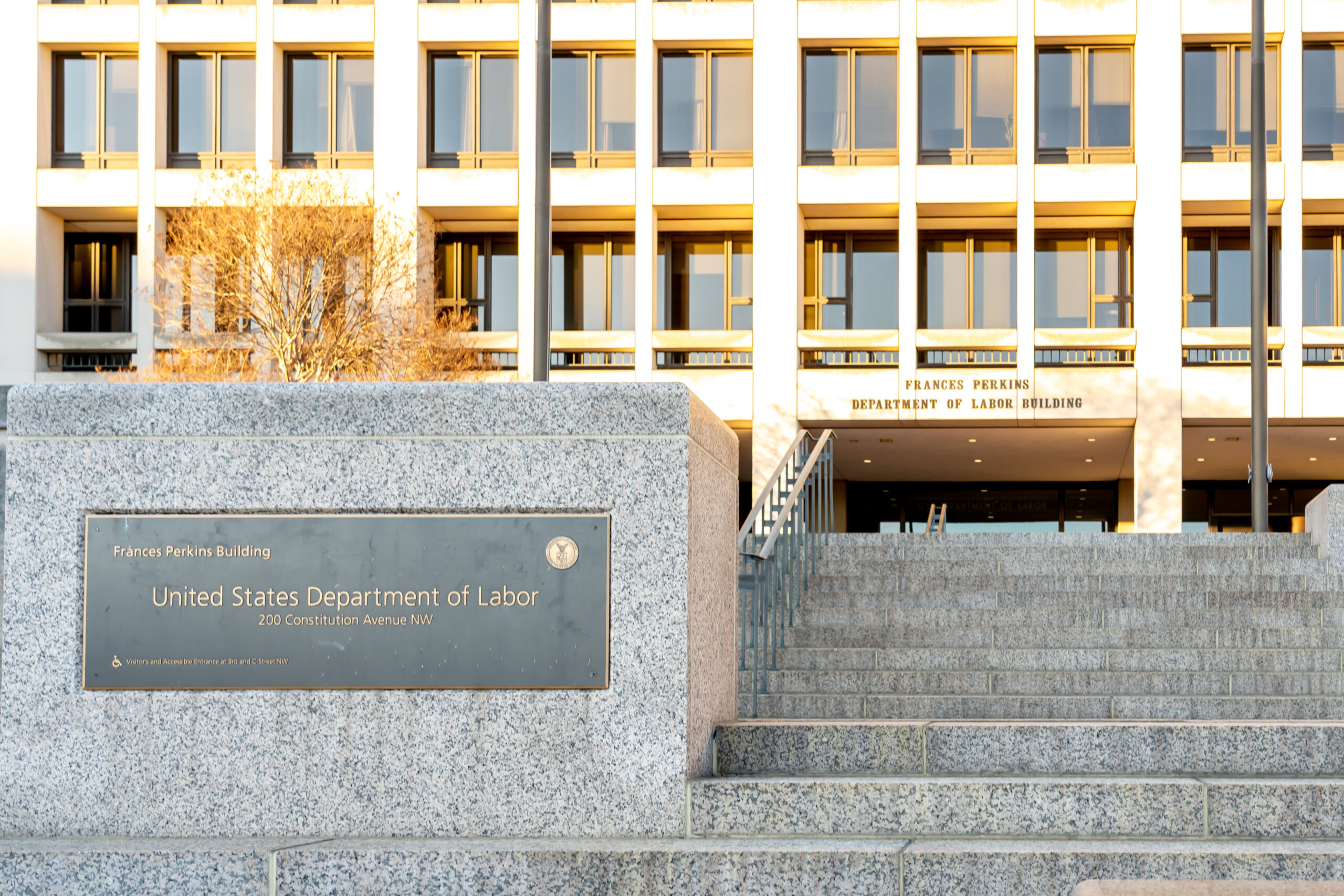
OFCCP released the national annual veteran hiring benchmark effective March 31, 2023, which measures the national percentage of veterans in the civilian labor force. Federal contractors are required to compare their percentage of hires who are protected veterans in each establishment on a facility-wide basis to the annual veteran hiring benchmark to measure the effectiveness of outreach and recruitment of veterans for employment. The national annual veteran hiring benchmark was decreased from 5.5% to 5.4% as of March 31, 2023. If a federal contractor has elected to calculate an individualized hiring benchmark using state-level availability of veterans, OFCCP has also updated state-level availability data.

Husch Blackwell attorney Tracey O’Brien has posted about the March 31 OFCCP recission of the Trump administration’s Final Rule, Implementing Legal Requirements Regarding the Equal Opportunity Clause’s Religious Exemption. The OFCCP refers to this recission as a return to “longstanding policy in place for more than 17 years to determine applicability of the religious